
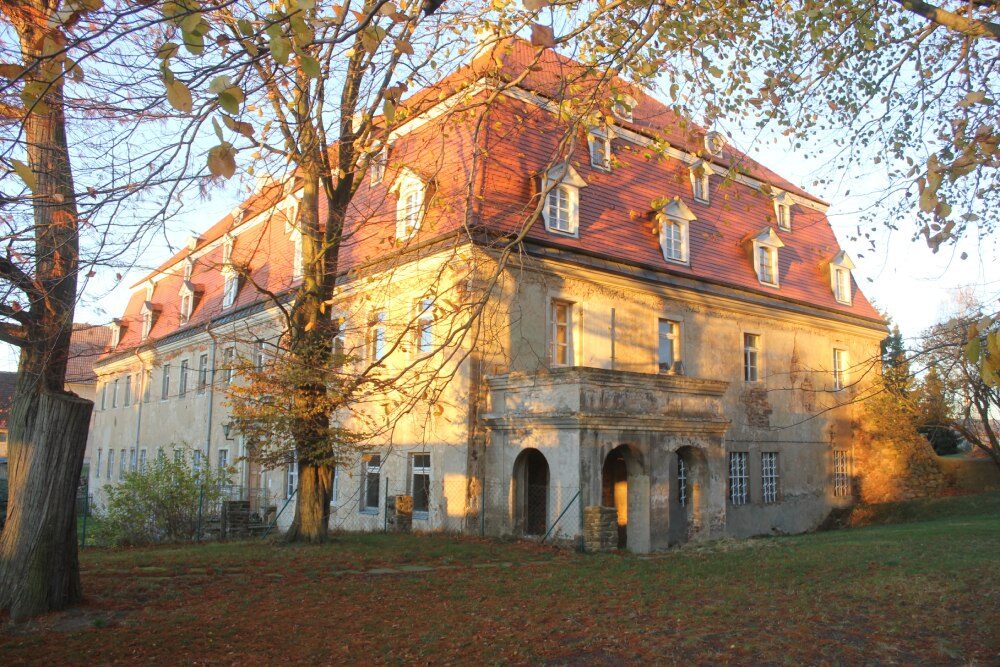
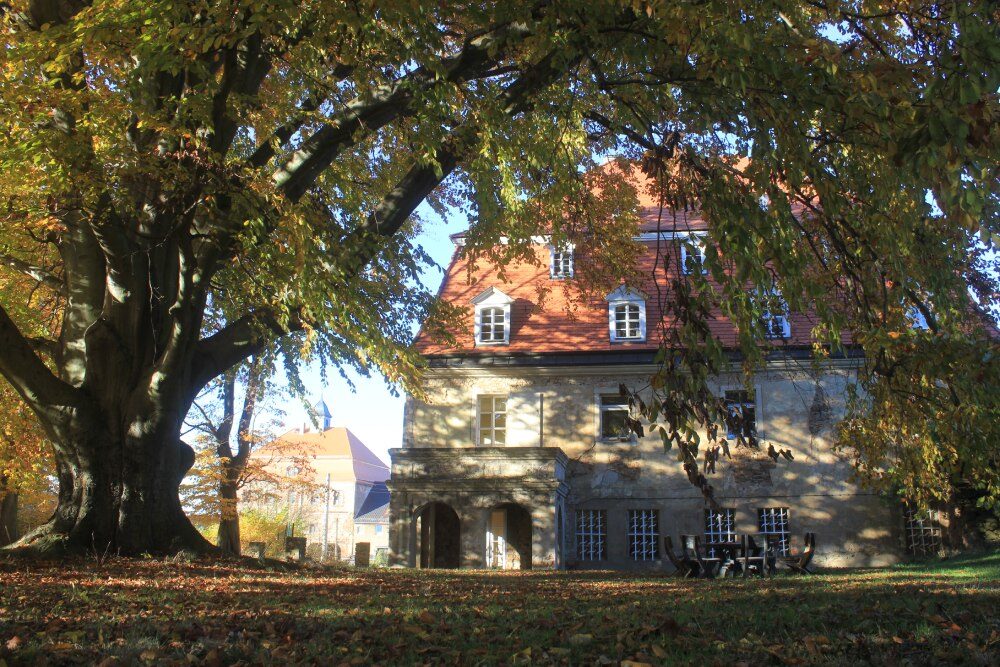
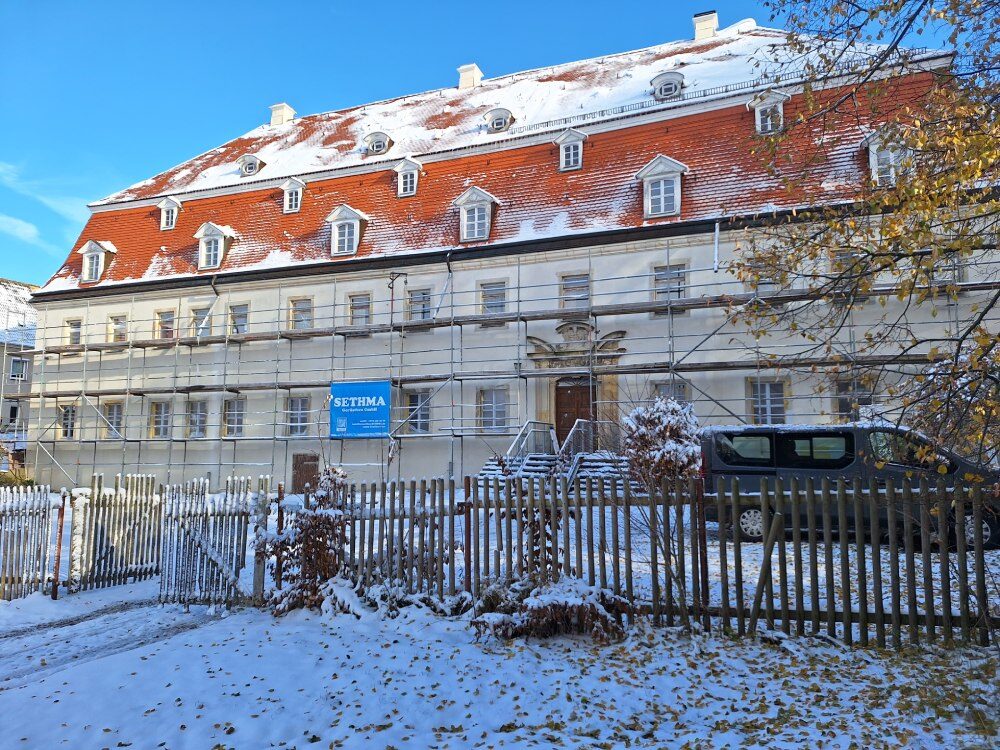
Schloss Wiederoda, whose predecessor building was first erected around 1400 and first documented in 1424, has been our second location since 2008 – home to the Alpaca Center and the Farm Shop, and the meeting point for our alpaca treks.
The castle traces back to a Renaissance-era predecessor building. When the village of Wiederoda was first mentioned, the von der Warthe family held the manor as a fief, which at the time was itself a fief of the Burgraves of Leisnig. From 1476 the von Heynitz family appears in the records, until the mid-16th century. The property then passed to the von Grunrade family (also spelled Grünrode). After this Saxon noble family died out, the estate was acquired in 1717 by Heinrich v. Bünau, an electoral Saxon councillor and the second son of the Bünaus of Püchau.
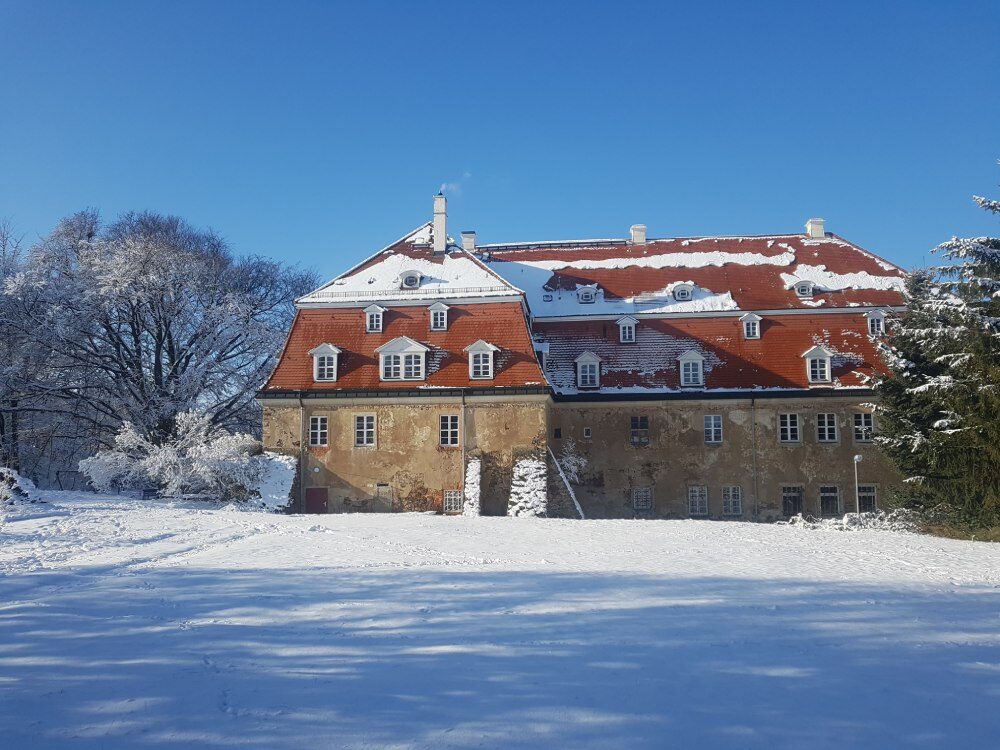
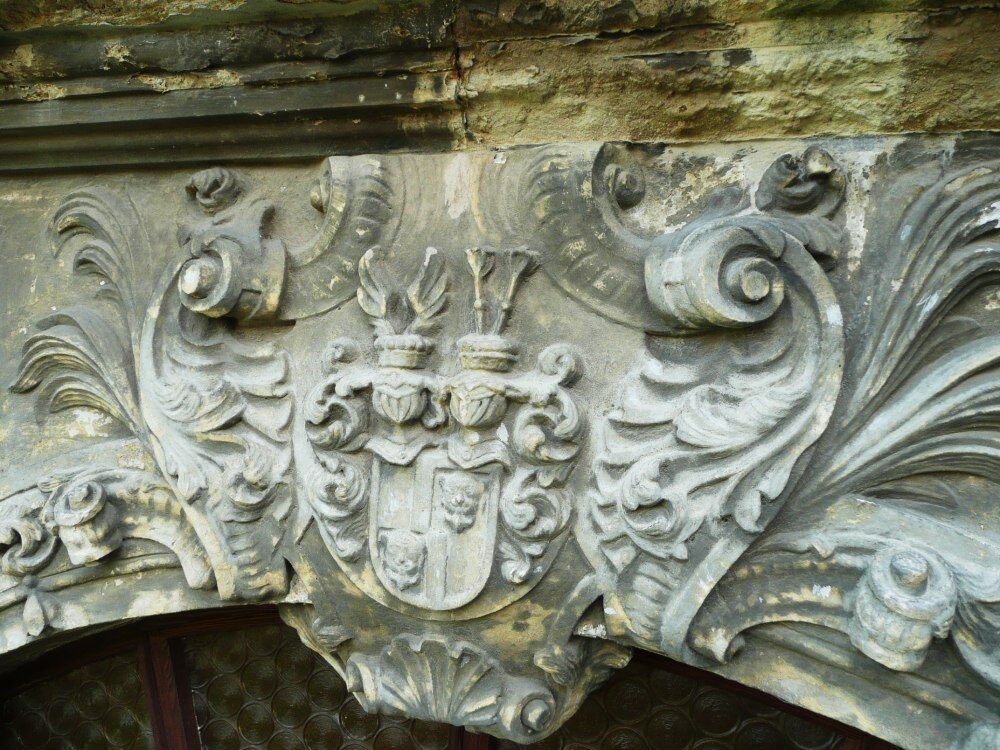
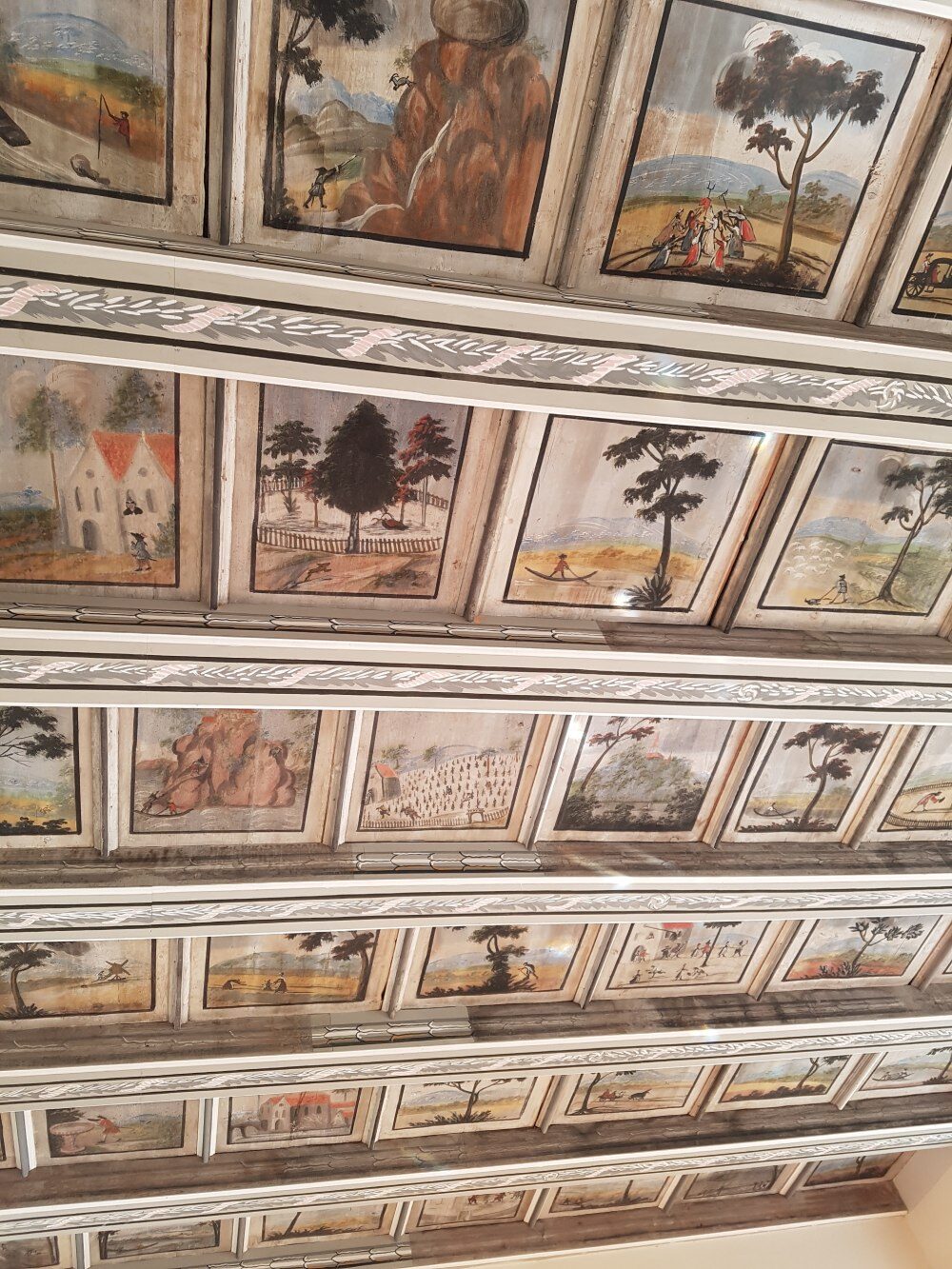
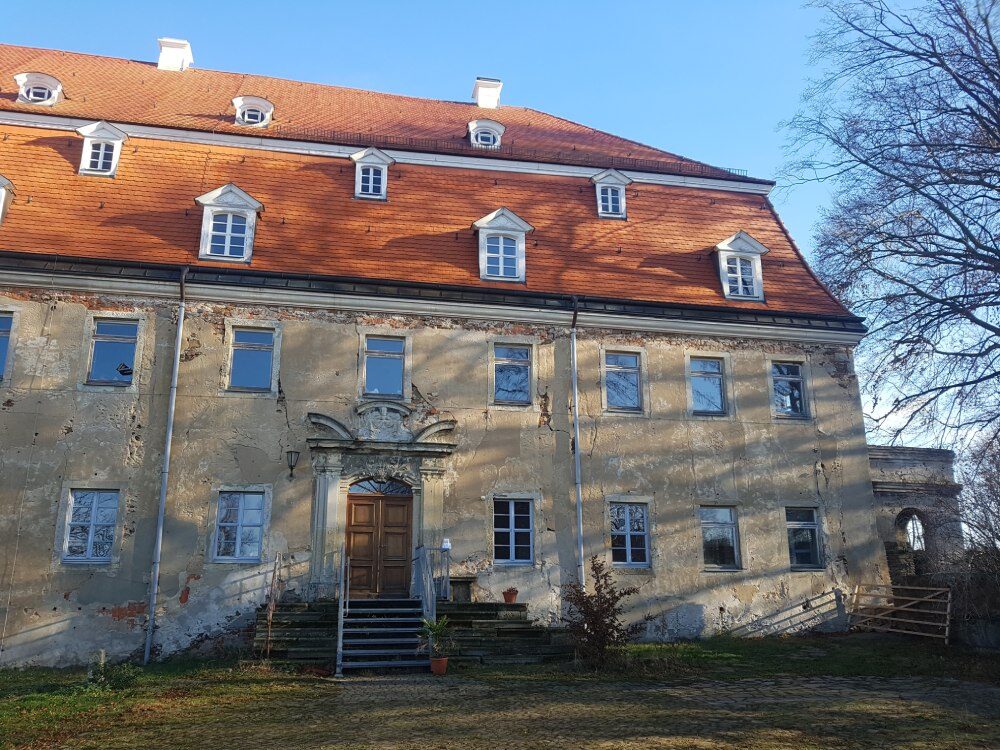
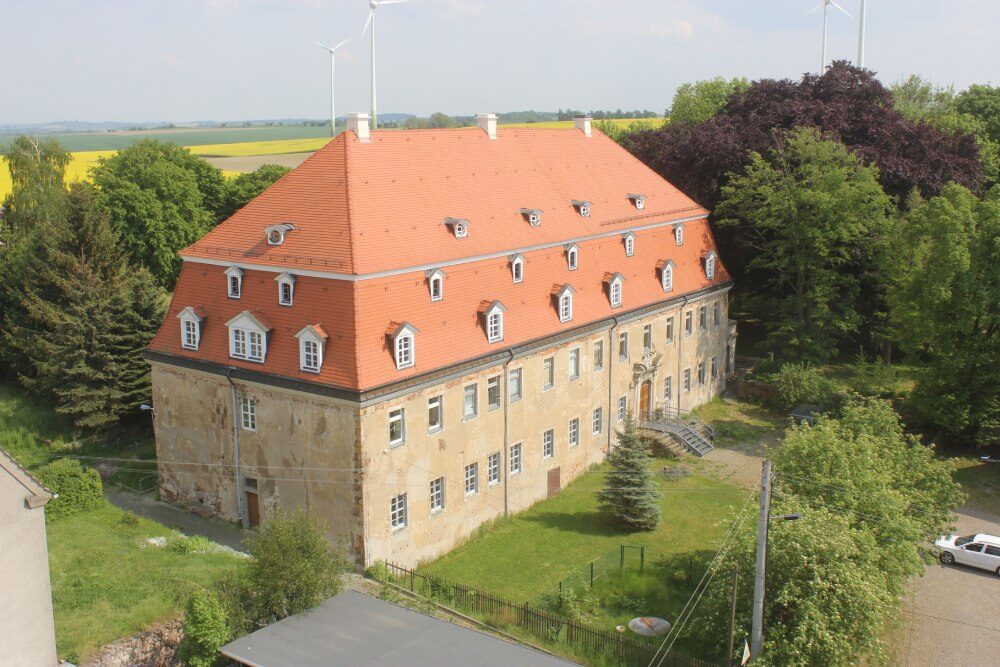
Around 1721 the new owner had the stately Baroque building erected, incorporating the existing older structure. Renaissance arches in several rooms still bear witness to the earlier building today. The formerly steep Renaissance roof was rebuilt as a three-story mansard roof structured with dormers. The façade received an elaborate illusionistic painting. The sandstone portal bears the Bünau coat of arms; above it is another, heavily weathered coat of arms.
In 1764 Wiederoda passed into bourgeois hands: Johann Gottlob Müller bought the manor, which included 280 hectares of land. His descendants sold it to Emil Barth in 1873. In 1922 the farmer and Reichstag member Heinrich Sieber married a granddaughter of Emil Barth and took over the estate. A daughter of Emil Barth married a son of the famous Gadegast Merino sheep breeding dynasty; the Dr. Steiger and Gadegast families made a name for themselves in Merino sheep breeding and exported top animals as far as England, France, Russia and even Australia. Saxon elite sheep are still known in Australia today.
In 1945 the Sieber family – like many large landowners – was deported to Colditz and later Rügen. The land was divided into 25 so-called new-farmer plots. After the arrival of Russian troops, the castle was used as the seat of the local Russian commandant's office and later as a hospital for Russian officers, followed by use as a tuberculosis home and by the administration of a machine and tractor station. From 1966 the building served as a school for children with mental and physical disabilities. The special-needs school moved to a new building in Oschatz in 2008.
The Torgau-Oschatz district subsequently sold the castle to Hartwig and Katharina Kraft von Wedel, who use the building as a seminar center and for tourism; today the castle houses seminar rooms alongside the Farm Shop. The Farm Shop has no fixed opening hours but can be visited by appointment or as part of tours or alpaca treks. Part of the rooms is used privately.
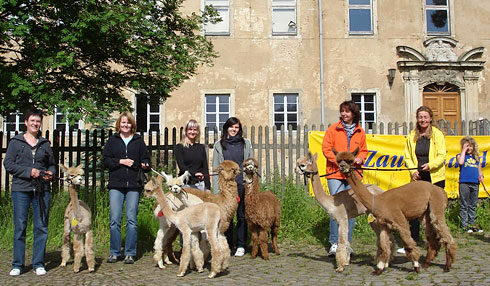
Photo Gallery
Address: Schloss Wiederoda, Lindenstr. 17, 04779 Wermsdorf OT Wiederoda
Visits are possible by appointment – please call ahead at 0172 - 750 60 40 or 0172 - 986 50 33.