About Alpacas
Alpacas, New World camelids from South America, are the national treasure of the South American peoples. In the Western world they have only been at home for about 30 years – and are increasingly conquering hearts and pastures in the countryside.
Topic 01
Alpacas, so it is said, are the "aristocrats" among all farmed livestock. Valuable breeding animals command high prices worldwide. Breeding these noble animals on the one hand, and having something beautiful made from their precious wool fiber on the other, captivates more and more friends of country living.
Breeding outside South America is relatively new: Chile has only permitted the export of these animals since 1984, and Peru since 1991. We receive inquiries about breeding animals from England, France, Austria, the Benelux countries, Estonia, Lithuania and Slovenia, but also from Georgia, Bulgaria, Hungary, Sweden, Finland and Switzerland. It is still a young, promising market, protected by elaborate import conditions and by the rarity of truly good breeding animals.
Alpaca breeding is a genuine market niche – an opportunity for anyone who lives in the countryside and wants to earn additional income through an enjoyable activity. Anyone who invests a larger sum can see substantial value growth through offspring; but even with a small number of animals, a breeder can expect to sell the young profitably.
In Europe especially, keepers and breeders with a hobbyist mentality used to dominate. For some time now, however, there has been a "new generation of breeders" (Romain Conjaerts, Luxembourg's first alpaca breeder). The success story of the Alpaka Zucht Verband Deutschland e.V. alone – founded in 2001 by 13 founding members and now more than 500 members strong – stands for a positive development of the alpaca market. Of course, competition also increases with the number of breeders – but "competition is good for business".
Added to this is the fact that alpacas from their countries of origin may currently only be imported directly into EU countries from Chile. Imports from Peru are no longer possible even via Switzerland.
Live your dream! For many, building a second source of income fulfils a lifelong dream. Alongside an often stressful office job, you can finally do what you always wanted to do: a peaceful country life, breeding alpacas, caring for newborns, weighing alpaca babies, training weanlings, watching the herd grow, making hay, caring for animals, halter-training alpacas and marketing them – some also refine the precious wool fiber and make their own products from it.
Whether you invest in alpacas to build a second source of income, or keep and breed them purely for pleasure – or both: one thing holds true for everyone. Alpaca breeding is a way of life.
Topic 02
published in the AZVD breeding catalogue 2002 / 2003
Alpaca fiber is among the most valuable natural fibers in the world. Alpacas were domesticated by the ancestors of the Incas several thousand years ago from the vicuña, the finest fiber animal in the world. The primary breeding goal was to improve the quality and quantity of the fiber – with tremendous success: the wild vicuña yields only about 200–300 g of fleece per shearing, while alpacas produce up to 6 kg of fleece per year.
Further breeding achievements: producing such an abundance of colors from a single-colored animal, and reducing the proportion of guard hair in top animals to below 1% of all fibers. A homogeneous, fine fleece with few guard hairs, high density and uniform color was already desired by the Incas. The Spanish conquerors reported that the alpacas of that time – owned only by the Church, the Inca ruler and nobles – were tended by breeding wardens and kept in large, topographically separated herds by color.
Besides "crimp" in the Huacaya and "curl" in the Suri, fineness is the key breeding goal for both breeds – measured in microns, one thousandth of a millimeter.
For a micron test, a tuft of hair about 5 cm in diameter is taken from the middle of the main blanket (about 15 cm below the spine), cut as close to the skin as possible, and sent to a qualified testing laboratory. Modern laser scanner technology delivers accurate results; you receive a fiber histogram and can better assess your alpaca's fiber quality.
The four most important figures are average fineness, standard deviation, the coefficient of variation, and the percentage of fibers over 30 microns. Average fineness expresses the mean value of the roughly 2,000 individual hairs in the sample. The standard deviation shows how much the fiber deviates from the average; the coefficient of variation is obtained by dividing the standard deviation by the average fineness and multiplying by 100. The lower both values are, the more even the fiber and the lower the prickle factor. Generally speaking: fiber under 20 microns is exceptionally good, anything over 30 microns is very coarse. Fiber quality is primarily determined genetically, but can also be influenced by age, nutrition, illness and stress.
Textiles made from fibers over 30 microns are sold under the label "huarizo" (a cross between llama and alpaca).
Alpaca fiber is valuable because it combines many commercially desirable attributes in a single fiber; negative characteristics are practically never found in alpaca fleece. The Spaniard Bernabé Cobo wrote in 1653 in History of the New World: "Alpaca, un cálido don de Dios a los Hombres" – Alpaca, a gift of warmth from God to mankind.
And alpaca is rare: animal hair makes up only 3% of the total fiber volume of the textile industry – of the roughly 5 million tonnes produced per year, only 5,000 tonnes are alpaca, i.e. one thousandth. Truly high-quality alpaca fiber is therefore extraordinarily rare.
Outlook: Alpaca is also referred to as the fiber of the future. Demand for this eco-friendly premium fiber is high, while supply is low due to the small population – and fiber quality in particular can be improved effectively and quickly through breeding. Alpaca breeding therefore has a bright future ahead of it worldwide.
Topic 03
The first commercial imports of alpacas to Europe and the USA date back more than 30 years. The USA currently has over 5,000 breeders with a total of about 150,000 alpacas, while Australia now has 150,000 to 200,000 animals, with a rising trend. We estimate the population in Europe, including England (about 25,000), at more than 50,000 alpacas – also rising.
Before 1984, alpacas existed in Europe only in zoos. Despite many attempts, no one succeeded in importing them for breeding purposes until then, apart from the Englishman Sir Titus Salt, who brought alpacas to England around 1850. One reason: the peoples of South America regarded the alpaca as a treasure and gift of the sun god Inti, and saw no reason why other peoples should breed these noble animals.
Import from Chile has only been possible since 1984, and from Peru since 1991. Even today it is not simple: both EU countries and countries of origin have restrictions and quarantine regulations, and an import is costly and time-consuming.
For sanitary reasons, direct imports from Peru to Europe were only possible via Switzerland until 2005; this option no longer exists, because the EU forced Switzerland to align with its regulations.
There are still occasional imports from Canada, Australia or New Zealand, though this is often not economically sensible – except for top animals such as breeding studs or a few select mares. Markets there are further advanced, and prices for good breeding animals are significantly higher than what can be achieved, for example, in Germany. It is notable that in Central Europe (apart from the UK) hardly anyone is willing to pay a multiple of the price of a good mare for the best breeding studs – even though only very few select studs really drive major breeding progress. In Australia and the USA, the best studs are auctioned off for 50,000 euros and upward.
In Europe the market is currently gaining strong momentum and becoming increasingly professional: the range of animals on offer is broadening, breeders' knowledge is growing, there are more local events and competitions, and there is also movement in the processing of fiber into finished products – though much still needs to happen so that every breeder can have high-quality end products made from their fiber.
In many countries a market has only developed in recent years: the first direct import to Finland became possible in 2004, as did the first to Norway. Because of the long gestation period (11–11.5 months) and the costly imports, populations can only grow slowly. As a result, the market value of good animals remains stable over many years, and a "boom and bust" development is very unlikely.
Market developments in other countries show that as the quality of the animals rises, there is a continuous, stable upward trend in average prices. Even older mares that pass on good traits and are good mothers can still be sold for a good price. Most breeders hold on to their top animals – when they are sold, it is at above-average prices.
Whether it's Finland, Sweden, Norway, the Benelux countries, Austria, Italy, Switzerland, France, Germany, Spain, the United Kingdom, Poland or the Baltic states – the number of alpaca breeders is steadily growing. More and more people see in alpacas the opportunity to live in the countryside and build value. At the same time, more and more breeding operations are expanding the refinement of wool fiber into high-quality end products.

Topic 04
In North America, alpacas are regarded as "The World's Finest Livestock Investment". Few investments are able to reproduce themselves every year; an alpaca has this quality. If you invest in a good pregnant broodmare, bred by a high-quality stud, her cria can be worth just as much as the mother herself after one year.
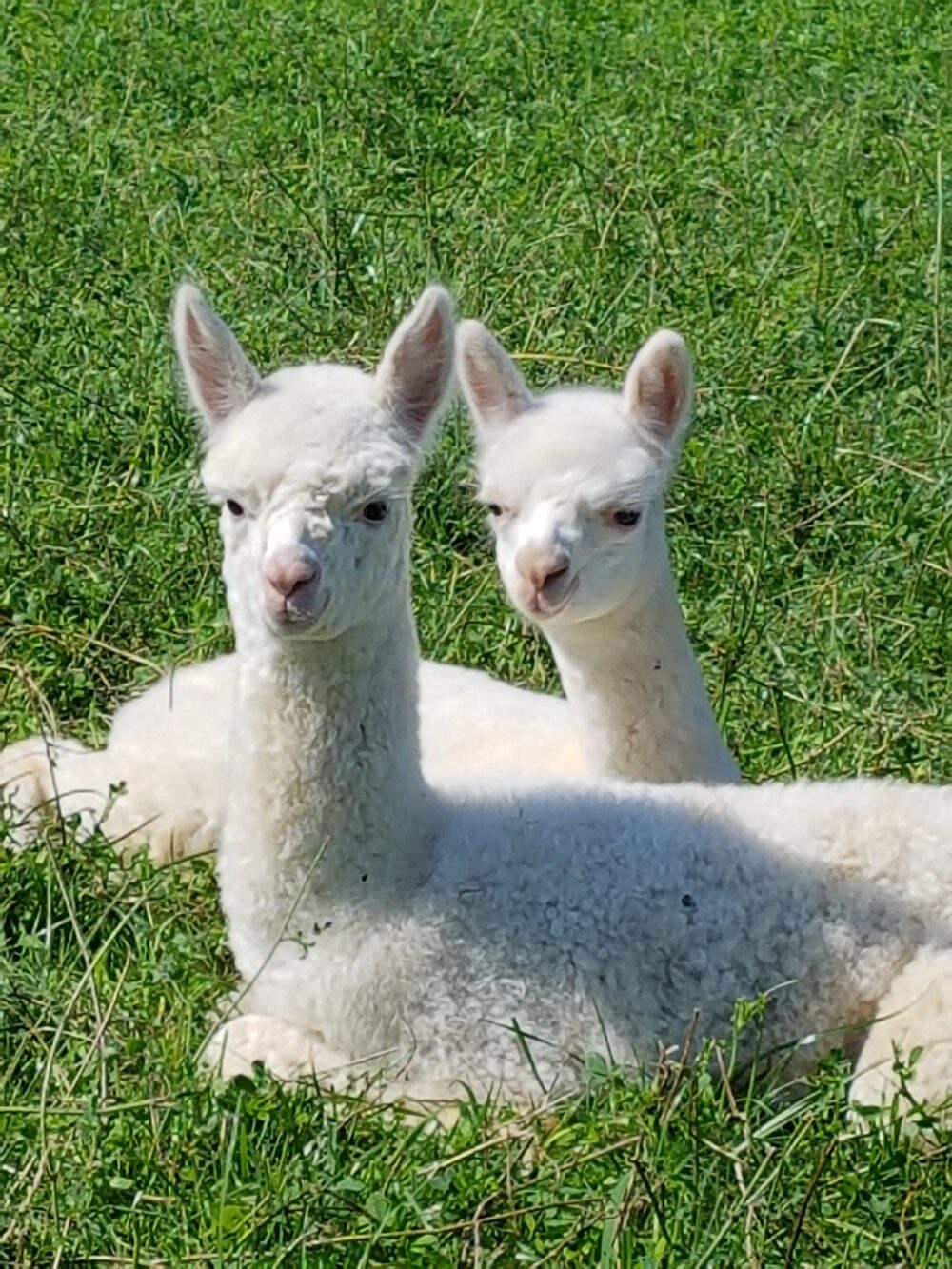
Female crias are generally more popular with breeders, since they grow the mare herd. Only a few male crias have what it takes to become a breeding stud – a stud must improve the average quality of the mares, otherwise you are breeding backwards. Most young males are therefore sold as leisure and fiber animals or as companion animals; potential breeding studs, on the other hand, trade far higher than good breeding mares. Some are trained as therapy animals – a future market with steadily rising demand.
With alpacas you have a large initial investment, relatively low ongoing costs, and high value growth – provided your animals are of good quality.
Demand for good breeding animals is rising, since alpacas are bred in almost all European countries and the market is still relatively young. In Germany, alpacas have been bred for about 30 years, the population (currently about 20,000 animals) grows every year, and quality improves from year to year – visible in the results of breed shows. Germany probably has the most active alpaca market on the European mainland.
Alpacas cannot be multiplied at will: the small number of high-quality animals worldwide, the long gestation period of 11–11.5 months, and the fact that mares usually have only one cria per year, all contribute to their retained value and price stability. Average prices for mares, young studs and stud fees in Germany have remained comparatively stable over the last ten years – not comparable to the ups and downs of the dollar, oil prices or grain prices. Protecting your invested capital with a livestock insurance policy is possible and advisable; the annual premium is typically around 4% of the insured value.
You must also expect losses. Rearing rates of 70–80% are achievable in Europe, but embryonic mortality in the first 30 days in particular is high: a New Zealand study found that 25% or more of pregnant mares can reabsorb or abort after 30 days. In South America the rearing rate is often only 30–50%.
Weanling mares are cheaper than pregnant mares; the price rises most notably from weanling to yearling, since at around 12–18 months (depending on body weight and maturity) a young mare can be bred for the first time and then sold as a pregnant mare. Make sure to acquire DNA-registered mares.
If you want to take part in the market and breed, we strongly recommend choosing the best possible quality when buying – because these are the animals with which you can build value. Bear in mind: the mare you acquire lives up to 15, sometimes 20 years, and will give you many crias. Her quality determines how easily you will be able to sell her offspring in the years to come.
With studs there are huge differences in quality and price. A potential breeding stud, or a first-class stud that already shines through good offspring, is priced considerably higher than a good mare. Value can also be determined by demand for his stud fees: if an outstanding stud is booked ten times a year at a stud fee of €500 net, he brings in €15,000 over three years. At a stud fee of €1,000 and 20 outside mares a year, that is €20,000 in revenue in a single year.
Top prices are paid for "flawless" examples of fiber and conformation. First-class breeding studs still fetch around 50,000 euros in the USA, Canada and Australia, and exceptional studs – especially in rare colors such as black or grey, or outstanding Suri studs – can fetch even more. The most expensive stud is said to have been sold in the USA for around 500,000 US dollars. Our own highest sale prices to date: 12,500 euros net for a young Huacaya mare, and 15,000 euros net each for very good Suri mares.
Ongoing costs are comparatively low. Most operations charge 1.50 to 2 euros net per day for boarding an alpaca. Compared to keeping horses, keeping alpacas is inexpensive, especially since less land is needed and an open shelter is sufficient. At the start, fencing costs and possibly a shelter are significant; ongoing costs include feed (concentrate feed, hay, minerals & vitamins), land maintenance, possibly lease payments, and veterinary costs – the latter are low, since alpacas are robust and not particularly prone to illness. Insurance against death and theft costs 2.5 to 4% of the total value to be insured. Added to this are marketing, association membership fees, registration, screening (ZEP), microchipping and stud fees.
Alpaca breeding in Central Europe is certainly not economically uninteresting, above all through the sale of breeding animals into growing markets. The essence of the article "New World Camelids as an Investment" by Prof. Dr. Dr. Matthias Gauly in the trade journal LAMAS: with a rearing rate of 70%, an annual return of about 30% – even taking debt servicing into account.
Topic 05
The alpaca was named Animal of the Year 2018. Many newcomers discover the animals through the internet or a TV report and consider whether they would like to keep such animals themselves. Some are gripped by alpaca fever and quickly turn their childhood dream into reality, others research for a while first – and for some, breeding their own remains forever a dream.
Experience has shown that keeping and breeding alpacas is also suitable for complete newcomers; however, you should educate yourself beforehand – this is also required by law. Some breeders have started with geldings or a small group of young studs to see whether working with the animals suits them. Most start directly with the purchase of pregnant breeding mares or female crias.
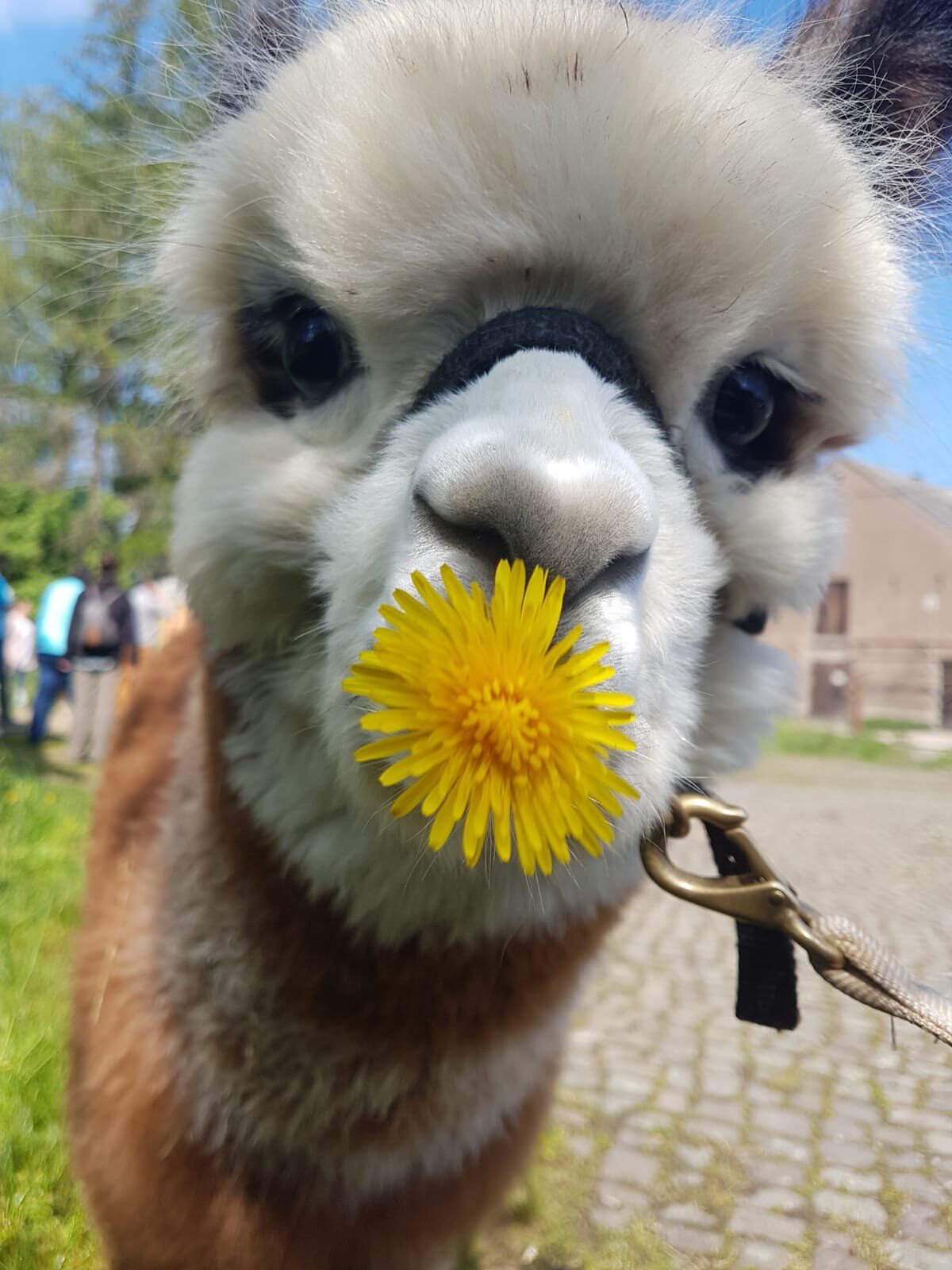
There are two breeds: the rare and elegant Suri alpacas – the niche within the niche market – and the cuddly Huacaya alpacas, which look like living teddy bears. Add to that color shades, breeding lines of Peruvian or Chilean type, imported animals, and pedigreed alpacas born in Germany.
Germany has three associations with a register for breeding animals; all now offer a screening (grading or assessment by experts) and DNA-based registration. The leading association is the Alpakazuchtverband Deutschland e.V. (AZVD) – most breeders have registered their animals there.
How you start depends on your goal and also on your budget: do you simply want to enjoy the animals, or do you see breeding as an investment and diversification, for instance for a farming business? Most newcomers enjoy the animals and life in the countryside, and see breeding as a counterbalance to their working life – while at the same time a serious investment in the future.
We are often asked: how many animals does one need to live off them? We then ask back: how much do you need to live on – 25,000 euros, 40,000 euros or more a year? From this you can calculate how many mares or crias you need to sell each year. Those who still have their own income and are not dependent on selling animals are at an advantage.
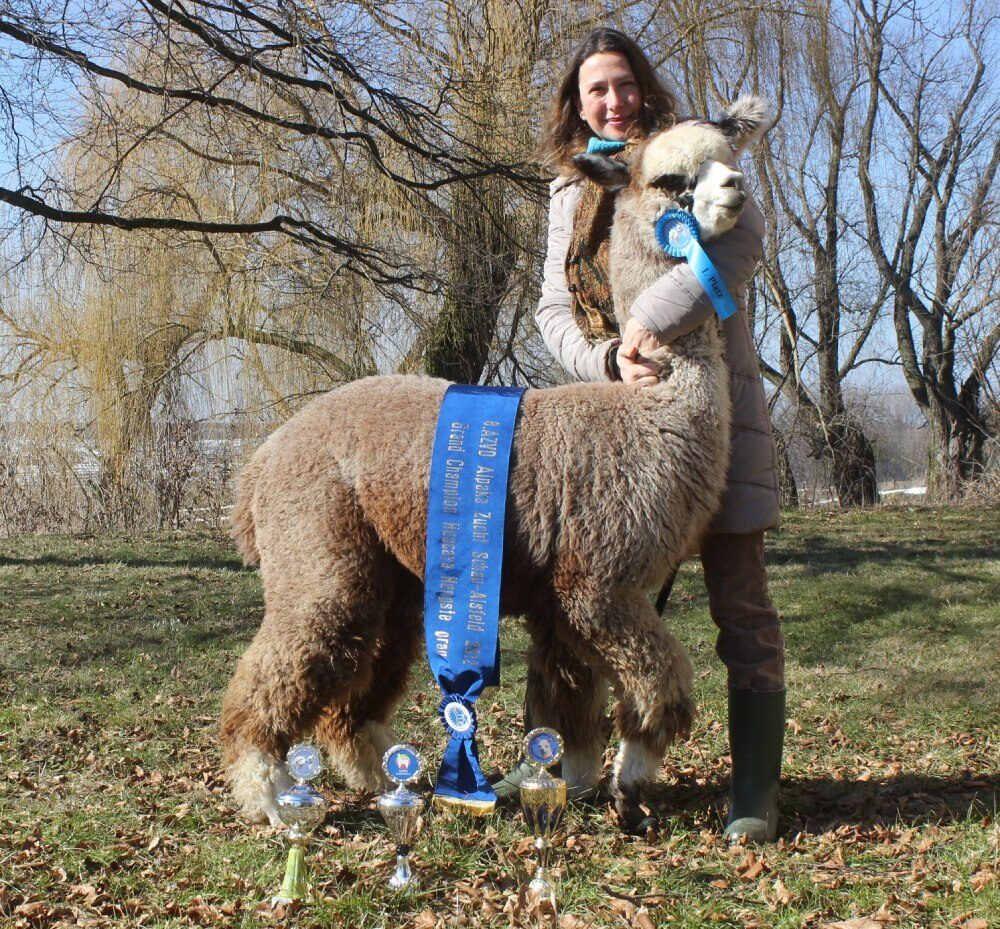
And please don't start with just a "pair". An English breeder who started in 1999 recommended: start with the best mares you can afford, and always breed with the best available studs. Anyone who starts with one or two pregnant mares and uses good stud genetics can immediately compete at the top level and do well with their own offspring at breed shows. You can also focus on rare colors from the outset. We can only advise against going purely for volume – bulk production will, for the foreseeable future, remain based in South America.
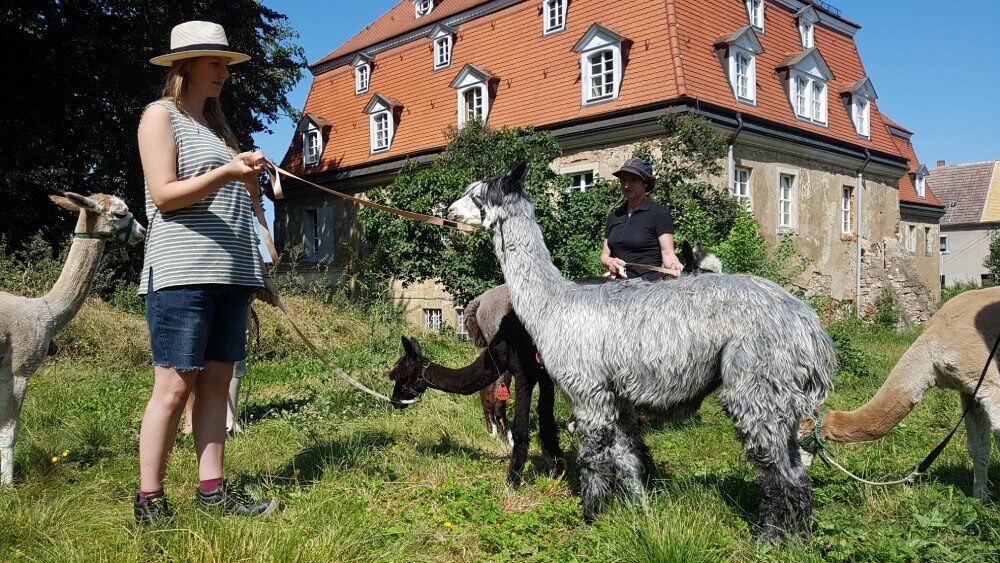
Our advice: visit different farms, form your own impression, go to a breed show. The judge explains why he assessed the placed animals the way he did, and you can often also watch the fleece competition. Buy where you have the most trust and where you get help when you need it. What about the breeding service? Can the breeder offer good stud genetics for your mares? Buy only DNA-registered animals wherever possible, ask to see the fiber histograms, and settle in the purchase contract what happens if a mare does not become pregnant for an extended period.
As a non-farmer or without livestock breeding experience, you need proof of competence for keeping alpacas and should reach an understanding with your local veterinary authority beforehand. The authority issues this proof – with us, you can take a course on keeping and breeding and then have your competence confirmed. Alpacas must be registered, and a livestock register must be kept. There is no statutory identification requirement, but microchips are recommended; registered animals additionally have DNA typing – the best protection against theft and the basis for parentage testing. Alpacas are not classed as game animals kept behind fencing; we recommend a 1.50 to 1.60 m high wildlife fence made of galvanized wire mesh.
We're happy to advise you
With us you gain the necessary expertise and, of course, your own alpaca mares – from our own breeding or directly imported, from a single select mare to a whole herd. Please call ahead to make an appointment.